
How Could We Detect Cancer Earlier? The Science Behind Liquid Biopsy
Approaches
Detecting cancer before symptoms appear is an important goal of modern cancer research. While established screening programmes have improved early detection for certain cancers, many cancers are still diagnosed at more advanced stages. Researchers are therefore investigating new ways to identify biological signals associated with cancer, potentially before it becomes clinically apparent.
One area attracting considerable interest is liquid biopsy: the analysis of biological material in blood and other body fluids to gain information about disease. Different approaches are being developed to detect cancer-associated DNA, proteins and other biomarkers, each offering a different perspective on the biology of cancer.
What Is a Liquid Biopsy?
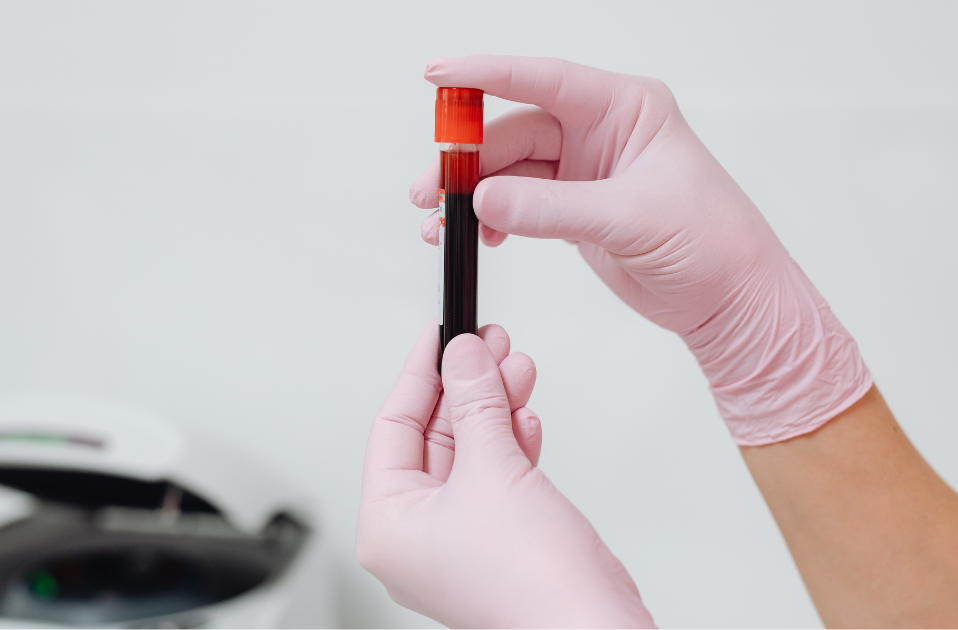
Unlike a conventional tissue biopsy, which involves collecting a sample directly from a suspected tumour, a liquid biopsy uses a sample of bodily fluid, most commonly blood, to investigate biological signals associated with disease.
Cancer cells can release material into the bloodstream, including circulating tumour DNA (ctDNA). This consists of fragments of DNA shed by tumour cells that can carry information about genetic alterations within a cancer. Other approaches investigate proteins, circulating tumour cells or signals captured by immune cells.
These methods differ in the biological signals they measure, how they analyse them and what their results can establish. Their potential applications range from monitoring known cancers to investigating whether cancer can be detected earlier.
Circulating Tumour DNA and Multi-Cancer Early Detection
Circulating tumour DNA is one of the most widely studied approaches in liquid biopsy research. By analysing DNA fragments in blood, researchers can look for molecular features associated with cancer. However, detecting ctDNA can be particularly challenging in early-stage disease, when tumours may release only very small quantities into the bloodstream.
This has contributed to growing interest in multi-cancer early detection (MCED) tests. These approaches aim to identify signals associated with multiple cancer types through a single test, with some also attempting to predict the tissue or organ where a cancer may have originated.
The potential advantage is clear: a single blood sample could eventually help identify cancers that might otherwise remain undetected until symptoms develop. Researchers are investigating different technologies, including DNA methylation analysis, which examines chemical modifications to DNA that can help distinguish biological patterns associated with different tissues and cancers.
However, important questions remain. A test must be sufficiently sensitive to identify disease while maintaining high specificity, meaning it correctly identifies people who do not have the condition. False-positive results can lead to further investigations, anxiety and potentially unnecessary procedures. False-negative results may provide false reassurance.
As highlighted by Wan, Sasieni and Rosenfeld in Nature Reviews Clinical Oncology (2025), large-scale clinical trials are evaluating whether the diagnostic performance of MCED tests translates into meaningful benefits for patients and populations.
Detecting a biological signal does not automatically establish clinical benefit. Researchers must also determine whether testing leads to earlier diagnosis, more effective treatment and improved outcomes, including reduced cancer mortality.
EDIM Technology: Investigating Signals Within Immune Cells
Another approach to liquid biopsy research is Epitope Detection in Monocytes (EDIM). Rather than focusing on free-floating DNA fragments, this method investigates specific protein epitopes (identifiable parts of proteins) within monocytes and macrophages, immune cells involved in responding to unwanted material in the body.
The EDIM approach used in PanTum Detect focuses on two biomarkers: Apo10, associated with the DNaseX protein, and TKTL1 (transketolase-like 1), a protein associated with altered cellular glucose metabolism.
The method analyses these biomarkers within immune cells using laboratory techniques, including flow cytometry, which identifies and measures characteristics of individual cells. The aim is to identify a pattern of biomarker signals that may indicate the presence of a suspicious tumour.
This differs from ctDNA-based testing: rather than analysing tumour-derived DNA fragments directly, EDIM examines protein epitopes within immune cells. Both approaches seek information from a blood sample, but they investigate different biological signals.
PanTum Detect: RMDM’s Approach to Early Detection
PanTum Detect is a blood-based, CE-marked and IVDR-certified in vitro diagnostic test that uses EDIM technology to measure two biomarkers, Apo10 and TKTL1, within monocytes and macrophages. RMDM brings PanTum Detect to clinicians in the UK, the Middle East and North Africa.
The two markers reflect different hallmarks of cancer. Apo10 is associated with disrupted programmed cell death and rises early, often over years. TKTL1 is associated with altered glucose metabolism and appears later, as a tumour becomes invasive. By combining both, the test is designed to flag the transition from premalignant lesions to malignant tumours, rather than either extreme.
Both markers reflect mechanisms common to solid tumours rather than to a single organ, so one blood sample can carry information regardless of where a tumour sits. Published studies cover 67 tumour types, and more than 280,000 tests have been performed. The reported sensitivity is 82.29% and the specificity is 99.17%.
In a study of more than 5,000 asymptomatic adults aged 50 to 70 at University Medical Centre Hamburg-Eppendorf (Burg et al., 2022), 151 people tested positive and 124 of them had a cancer or premalignant lesion confirmed on imaging. Most of these were premalignant lesions (97), alongside 27 malignant tumours. In practical terms, four in five positive results led to a clinically meaningful finding, which is not the same as four in five being cancer.
PanTum Detect is a screening signal, not a diagnosis. It does not show where a tumour is or what type it is, so a positive result is followed by further tests and imaging. It is intended for adults without symptoms, not for monitoring known cancer, and a negative result does not rule cancer out.
From Promising Science to Clinical Practice
Liquid biopsy research is expanding the range of biological signals scientists can investigate, from circulating DNA to proteins and markers found within immune cells. These different approaches reflect the complexity of cancer biology and the challenge of identifying disease before it becomes clinically apparent.
The next step is to establish how reliably each test performs in its intended population, how results should guide further investigation and whether its use improves patient outcomes. As the World Health Organization emphasises, early diagnosis and screening can contribute to reducing cancer mortality, but effective implementation depends on appropriate evaluation, timely follow-up and access to treatment.
The future of early cancer detection will depend on demonstrating that tests built around promising biomarkers can make a meaningful difference in clinical practice. That requires clear evidence, a defined pathway after a result, and tests that fit into routine care.
For PanTum Detect, that means a simple blood draw added to an annual health check, with positive results followed by specialist referral and targeted imaging. Early detection works best when it reaches people before symptoms appear, and for most people the first conversation about it will be with their family doctor.
References
- Wan JCM, Sasieni P, Rosenfeld N. Promises and pitfalls of multi-cancer early detection using liquid biopsy tests. Nature Reviews Clinical Oncology. 2025;22:566–580. Read on PubMed.
- Valpione S, Clipson A, Rothwell DG, et al. Advancing the applications of liquid biopsies in oncology. Nature Reviews Genetics. 2026;27:724–738. Read on Nature.
- Feyen O, Coy JF, Prasad V, et al. EDIM-TKTL1 blood test: a noninvasive method to detect upregulated glucose metabolism in patients with malignancies. Future Oncology. 2012;8(10):1349–1359. Read on PubMed.
- Burg S, Grust ALC, Feyen O, et al. Blood-test based targeted visualization enables early detection of premalignant and malignant tumors in asymptomatic individuals. Journal of Clinical and Medical Images. 2022;6.
- World Health Organization. Cancer. WHO cancer overview.
- RMDM. PanTum Detect. RMDM Diagnostics.