
Latest Breakthroughs in Early Cancer Detection – 2026 Update: Multi-Cancer Blood Tests and AI Diagnostics

By Dr. Letizia Gulino, PhD
Head of Science & Technology, RMDM Group
Dr. Letizia Gulino is the Head of Science and Technology at RMDM Group, bringing over 20 years of extensive experience in molecular medicine research and private sector innovation. Holding a PhD in Molecular Medicine, Dr. Gulino has dedicated her career to advancing scientific understanding and developing cutting-edge solutions in health and disease. Her expertise bridges fundamental research and translational applications, making her a leading voice in the intersection of science, technology, and patient-centered innovation. At RMDM, she spearheads initiatives that integrate molecular insights with practical strategies to address complex diseases, reflecting her commitment to bridging science and real-world impact.
The landscape of cancer detection is undergoing a revolutionary transformation in 2026 as multi-cancer blood tests and AI-powered diagnostics converge with advanced molecular assays and imaging analytics. These non-invasive screening technologies are giving clinicians unprecedented capabilities to detect multiple cancer types in their earliest, most treatable stages – with improved accuracy and sensitivity that was unimaginable just a few years ago.
This article explains what multi-cancer early detection (MCED) blood tests and AI diagnostics are, how liquid biopsy modalities like ctDNA and methylation profiling work, and why these advances matter for both patients and clinicians. We’ll explore the clinical applications of these technologies, examine emerging biomarkers and multi-omic approaches, and discuss foreseeable innovations that could further increase sensitivity and specificity in the near term.
Whether you’re considering integrating these cutting-edge tools into your practice or want to stay informed about the latest advances in oncology, this guide will provide the insights you need to navigate this exciting frontier in cancer care.
What Are Multi-Cancer Early Detection Blood Tests and How Do They Work?
Multi-cancer early detection (MCED) blood tests are screening tools that analyse molecular signals in blood, most commonly circulating tumour DNA (ctDNA), methylation patterns and protein biomarkers, to detect signs suggestive of cancer before symptoms arise. These assays work by extracting cell-free DNA (cfDNA) from a blood draw, sequencing or profiling that material with next-generation sequencing or targeted methylation methods, and then using classifiers to predict the presence and likely tissue of origin. The specific benefit is the potential to identify multiple cancer types from one non-invasive test, enabling earlier diagnostic work-up and possible stage migration. Below is a comparison of common MCED approaches to clarify strengths and trade-offs for clinicians and patients.
MCED approaches compared for screening and early detection:
| Test approach | Biomarker / method | Typical value (cancers targeted / performance note) |
| Methylation-based assays | cfDNA methylation profiling | Broad tissue signal; can indicate tissue of origin with moderate-to-high specificity |
| Mutation-based ctDNA tests | Targeted mutation panels / NGS | High specificity for known mutations; sensitivity varies by tumour shedding |
| Protein biomarker panels | Serum protein signatures + ML | Complements DNA signals; may improve sensitivity for some cancers |
Which cancers can multi-cancer blood tests detect early?
Many MCED studies and validation efforts have shown that blood-based multi-cancer tests are more effective at detecting tumours that release higher amounts of DNA into the bloodstream or exhibit distinctive methylation patterns. Cancers such as colorectal, lung, and pancreatic malignancies often produce detectable ctDNA or methylation signals at earlier stages compared with other tumour types, increasing the likelihood of early identification through blood-based assays. By contrast, some cancers, especially those located in anatomically “protected” or isolated sites, such as certain brain tumours, shed very little ctDNA, making them more challenging to detect with current blood-only approaches. Understanding these biological differences helps clinicians set realistic expectations and plan appropriate follow-up diagnostic tests when a blood test returns a positive result.
How Is AI-Powered Cancer Diagnostics Transforming Early Detection in 2026?
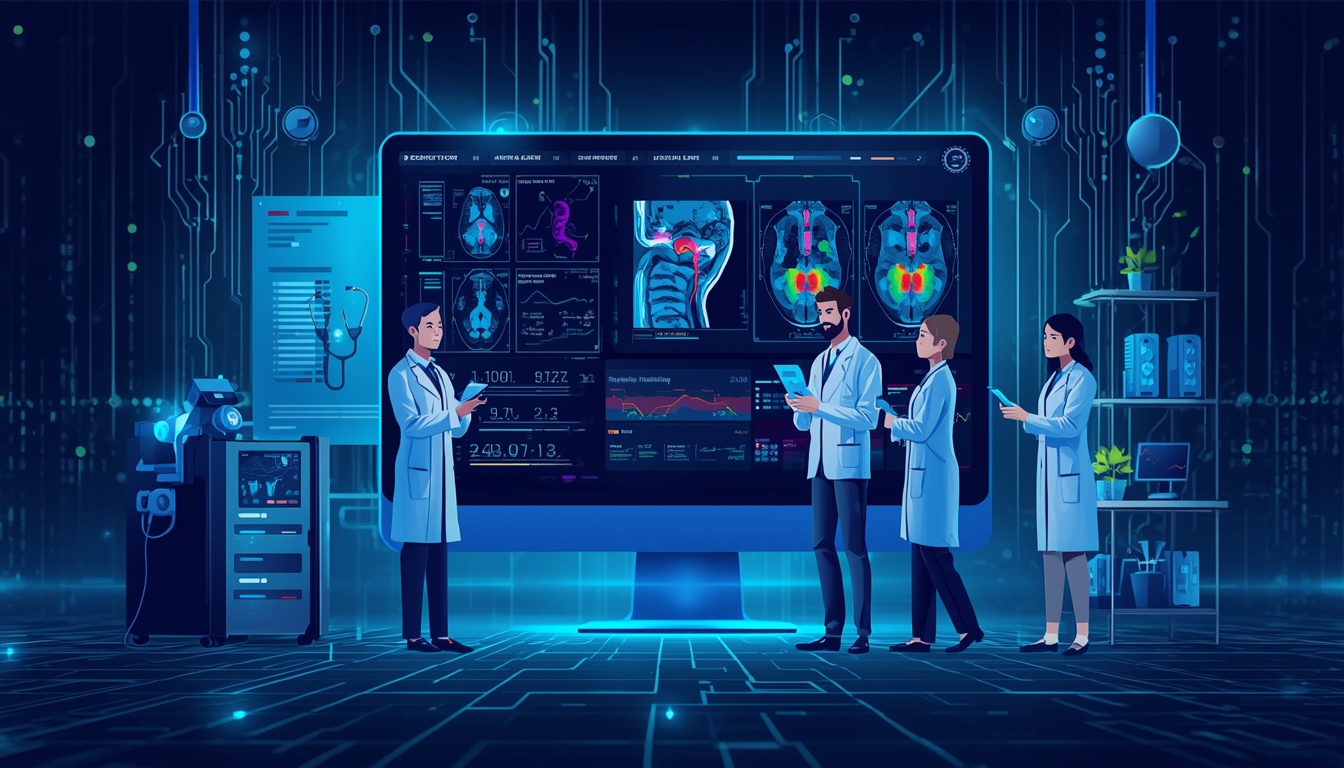
AI-powered cancer diagnostics in 2026 combine machine learning models with molecular and imaging data to detect patterns humans may miss, enabling faster triage and improved diagnostic accuracy. AI systems ingest radiology images, next-generation sequencing outputs or methylation signatures and learn discriminative patterns that correlate with malignancy or tissue origin. The result is enhanced sensitivity and specificity in many scenarios, reduced inter-reader variability in imaging interpretation and expedited prioritisation of suspicious cases for follow-up.
What AI technologies are used in cancer diagnostics today?
Contemporary AI technologies in oncology include convolutional neural networks for imaging, supervised machine learning classifiers for molecular signatures, and ensemble models that integrate multi-modal inputs. Deep learning excels at extracting high-dimensional features from CT or MRI scans, while gradient-boosted trees or neural networks handle structured molecular data like mutation counts or methylation vectors. These systems are applied across imaging triage, biomarker interpretation and treatment-response prediction, enabling more consistent detection and interpretation across clinical settings.
Together, these developments position AI as a force multiplier for both imaging-based and blood-based early detection.
How does AI improve accuracy and speed in cancer detection?
AI improves accuracy by identifying complex, multivariate patterns that correlate with malignancy, reducing human variability in interpretation and combining weak signals across data types to increase confidence. Speed gains come from automated preprocessing and prioritisation that flag high-risk cases for expedited review, shortening diagnostic pathways. A conceptual workflow: blood sample → automated assay + ML classifier → risk score → expedited imaging or specialist referral for high-risk results, which shortens time to diagnosis and treatment initiation.
What are the challenges and future prospects of AI in cancer screening?
Key challenges include the need for large, diverse, prospectively collected datasets to avoid bias, ensure generalisability and satisfy regulatory requirements. Data privacy, explainability of black-box models and integration into clinician workflows are ongoing hurdles. Future prospects emphasise federated learning to improve model robustness without centralising data, improved interpretability tools for clinicians, and multi-modal models that fuse imaging and molecular signals to further raise diagnostic performance.
What Are the Latest Advances in Liquid Biopsy Technology for Cancer?
Liquid biopsy advances in 2026 focus on improved sensitivity for early-stage disease through multi-omic approaches, fragmentomics and enhanced methylation assays, alongside reductions in sequencing cost and improved analytics. The latest assays combine the detection of ctDNA mutations with methylation profiles and protein signatures to capture more detectable signals, while machine learning algorithms help reduce false positives. These improvements expand clinical applications beyond monitoring to include population-level screening pilots and more reliable minimal residual disease (MRD) detection. The table below clarifies modality roles across screening and monitoring use-cases.
| Modality | Detected analyte | Clinical application / typical use |
| Mutation-based ctDNA | Somatic mutations in cfDNA | Treatment selection, MRD monitoring; limited early-screening sensitivity alone |
| Methylation profiling | cfDNA methylation signatures | Screening and tissue-of-origin prediction; improved early-stage sensitivity |
| Protein + multi-omic panels | Proteins + cfDNA signals | Complementary screening signals; may increase sensitivity for low-shedding tumours |
How is liquid biopsy changing patient monitoring and treatment?
Liquid biopsy allows minimally invasive, continuous monitoring of patients for minimal residual disease (MRD), early detection of relapse, and real-time assessment of treatment response. By following molecular signals over time, clinicians can identify recurrence before it becomes visible on imaging and make timely adjustments to therapy. This approach supports personalized treatment decisions, accelerates feedback on clinical response, and may improve outcomes through earlier intervention.
Why Are Non-Invasive Cancer Screening Advancements Critical for Early Detection?
Non-invasive screening advancements reduce barriers to participation, permit safe repeat testing, and reach a larger portion of the population, which together support earlier diagnosis and potentially better outcomes. By reducing the need for invasive procedures, these technologies lower the risk of immediate complications and enable health systems to monitor high-risk groups over time. The next paragraphs unpack patient experience, treatment impact and guideline evolution that are central to adoption.
What is the impact of early detection on cancer treatment success?
Earlier detection typically expands treatment options, allowing less extensive surgery, organ-preserving therapies and earlier use of curative-intent interventions. Detecting disease at a lower stage often correlates with higher likelihood of successful treatment and longer survival, because smaller tumours are more amenable to complete resection or targeted systemic therapies. Clinicians should therefore prioritise pathways that translate molecular detection into timely diagnostic confirmation and treatment planning.
How are screening guidelines evolving with new technologies?
Screening guidelines evolve as prospective trial data, regulatory milestones and cost-effectiveness analyses emerge; regional differences reflect local policy, healthcare capacity and reimbursement frameworks. Guideline committees increasingly consider evidence from multi-modal trials that pair biomarkers with imaging, and they emphasise the need for prospective validation before broad population rollout. Readers should consult local guidance and specialist advice when considering new screening modalities, and also consider implications for follow-up cascades and patient counselling.
For clinicians or service managers exploring implementation, contact RMDM for consultation or further information on integrating non-invasive screening pathways into practice.
How Are Multi-Cancer Detection Tests Being Integrated into Clinical Practice?
Integration of MCED tests into clinical practice in 2026 follows a staged pathway: prospective validation in population cohorts, regulatory review for screening claims, establishment of laboratory and reporting workflows, and alignment with referral and follow-up pathways. Adoption depends on evidence that tests improve meaningful outcomes, reimbursement policy and provider education. The table below summarises key implementation considerations that clinicians and policy-makers need to take into account.
| Implementation domain | Barrier / requirement | Value / impact on adoption |
| Regulatory status | Need for clear intended-use approval (screening vs adjunct) | Determines permitted clinical use and payer acceptance |
| Cost & reimbursement | Test pricing and coverage rules | Influences patient access and equity |
| Clinical workflow | Lab partnerships, reporting, triage pathways | Ensures timely follow-up and reduces diagnostic delays |
What are the current clinical trials and regulatory approvals?
In 2026, the field includes prospective screening trials and large validation cohorts that provide the primary evidence pathway for screening claims; regulators assess intended use, population benefit and analytic performance. Regulators evaluate intended use, population benefit, and analytic performance. Approval decisions depend on whether a test is intended as a population screening tool or as an additional diagnostic aid, with different evidence requirements for each. Clinicians should seek up-to-date regulatory guidance and peer-reviewed trial reports when evaluating test readiness for clinical pathways.
How do healthcare providers adopt new screening technologies?
Providers adopt new screening technologies by establishing validated laboratory partnerships, training clinicians in test interpretation and patient counselling , and implementing clear referral and follow-up pathways for positive results. Practical steps include defining target populations, consenting processes, ensuring capacity for confirmatory imaging or biopsy and auditing outcomes. A checklist for adoption might include laboratory validation, clinician education, patient information materials and electronic health record integration.
What are the cost and accessibility considerations for patients?
Costs are driven by assay complexity, sequencing depth, and laboratory infrastructure, while reimbursement policies differ by region and clinical indication. Initial rollouts may concentrate in academic or urban centres with specialised labs, limiting early accessibility and potentially exacerbating health inequities. Patients should discuss out-of-pocket costs, the test’s purpose, and downstream implications with their clinician to make informed decisions.
What Future Innovations Are Expected in Early Cancer Detection Beyond 2026?
Future innovations will likely combine multi-omic signals with advanced AI models to increase sensitivity and specificity while preserving manageable false-positive rates. Integration of fragmentomics, extracellular vesicle analysis and proteomics alongside methylation and mutation signals promises richer molecular fingerprints of early disease. Systems-level advances may enable personalised, risk-stratified screening schedules that allocate resources where they yield most benefit. The list below highlights promising directions and practical considerations.
Promising innovation directions:
- Multi-modal assays fusing molecular and imaging data for improved detection.
- Federated learning to expand AI training without compromising patient privacy.
- Discovery of novel biomarkers (fragmentomics, extracellular vesicles) to capture low-shedding tumours.
How might AI and liquid biopsy technologies evolve?
AI and liquid biopsy evolution is likely to emphasise multi-modal models that integrate imaging radiomics, methylation signatures and proteomic data to improve classification accuracy. Federated and privacy-preserving learning frameworks will enable model training across institutions without centralising sensitive data, improving generalisability. Over time, assay costs may decrease and reporting turnaround times shorten, making frequent monitoring and wider screening more feasible.
What emerging biomarkers show promise for early detection?
Emerging biomarker categories include fragmentomics (cfDNA fragment pattern analysis), refined methylation markers that enhance tissue specificity, extracellular vesicle cargo profiling and advanced proteomic signatures. Each offers complementary strengths: fragmentomics can detect subtler DNA shedding patterns, while vesicle content and proteomics may capture tumour biology not reflected in cfDNA alone. Combining these biomarkers can improve detection of tumours that are otherwise low-shedding.
How will personalised screening improve cancer outcomes?
Personalised screening uses individual risk factors: genetics, exposure history, clinical risk scores, combined with molecular test results to adapt screening intervals and modalities to each person’s risk profile. This targeted approach directs resources to those most likely to benefit, increases detection yield and reduces unnecessary testing for low-risk individuals. A practical scenario: a high-risk patient receives combined molecular screening at shorter intervals with AI-driven triage to imaging when signals emerge, improving early detection efficiency and potential outcomes.
Conclusion
Advancements in early cancer detection through multi-cancer blood tests and AI diagnostics offer significant benefits, including non-invasive screening and improved diagnostic accuracy. These innovations empower clinicians to identify cancers earlier, enhancing treatment options and potentially improving patient outcomes. For those looking to integrate these cutting-edge technologies into their practice, we encourage you to reach out for tailored guidance. Explore our resources to stay informed and take the next step in enhancing your cancer detection strategies.
Frequently Asked Questions
What is the role of biomarkers in cancer detection?
Biomarkers play a crucial role in cancer detection by providing measurable indicators of cancer presence or progression. They can be proteins, genes, or other molecules that are associated with cancer. In the context of multi-cancer early detection tests, biomarkers such as circulating tumour DNA (ctDNA) and methylation patterns are analysed to identify potential malignancies. These biomarkers help clinicians assess the likelihood of cancer, guide further diagnostic testing, and monitor treatment responses, ultimately improving patient outcomes through timely interventions.
How do multi-cancer blood tests compare to traditional biopsy methods?
Multi-cancer blood tests offer a non-invasive alternative to traditional biopsy methods, which often require tissue samples obtained through invasive procedures. Blood tests analyse molecular signals in the bloodstream, allowing for the detection of multiple cancer types from a single sample. This approach reduces patient discomfort and risk of complications associated with invasive biopsies. However, while blood tests can provide valuable early detection, they may not replace biopsies entirely, as tissue samples are still necessary for definitive diagnosis and treatment planning.
What are the limitations of current multi-cancer early detection tests?
Current multi-cancer early detection tests have limitations, including variable sensitivity and specificity depending on the cancer type and stage. Some cancers, particularly those that shed minimal DNA or have atypical biological behaviours, may evade detection. Additionally, false positives can occur, leading to unnecessary anxiety and follow-up procedures. As these tests are still being validated, ongoing research is essential to enhance their accuracy and reliability, ensuring they can be effectively integrated into routine clinical practice.
How can patients prepare for a multi-cancer blood test?
Patients preparing for a multi-cancer blood test should consult their healthcare provider for specific instructions, as preparation may vary by test type. Generally, patients may be advised to fast for a certain period before the blood draw or to avoid specific medications that could interfere with test results. It’s also important for patients to discuss their medical history and any symptoms they may be experiencing, as this information can help clinicians interpret the results more accurately and determine the next steps.
What advancements are expected in cancer detection technologies beyond 2026?
Innovations may include the development of more sophisticated AI algorithms that can analyse complex datasets and identify subtle patterns indicative of early-stage cancers. Additionally, the discovery of novel biomarkers and improvements in liquid biopsy techniques will likely expand the range of detectable cancers, ultimately leading to more personalised and effective screening strategies.
How do healthcare systems ensure equitable access to new cancer detection technologies?
Healthcare systems can ensure equitable access to new cancer detection technologies by implementing policies that address cost, availability, and education. This includes negotiating fair pricing with manufacturers, providing training for healthcare providers, and establishing clear guidelines for the use of these technologies in diverse populations. Additionally, outreach programs can help raise awareness and encourage participation in screening among underrepresented groups, ensuring that advancements in cancer detection benefit all patients, regardless of socioeconomic status or geographic location.